

Quick Answer: The average MPG of a semi truck is about 6 to 7 miles per gallon. Newer aerodynamic tractors on flat highway runs can reach 8 to 9 mpg, while heavy loads, mountain routes, idling and high speeds pull the number down to 5 or less.
The Semi Truck average mpg can vary based on several factors; however, on average, semi-trucks are estimated to achieve between 5 and 7 miles per gallon. This relatively low fuel efficiency results from the large displacement engines necessary to power these heavy vehicles.
On top of that, semi-trucks are typically designed for power and torque rather than fuel efficiency. Despite this, many strategies can be employed to improve fuel economy tractor trailer, such as maintaining correct tire pressure, reducing idling time, and investing in aerodynamic add-ons.
Lets dive in What is an average mpg of a semi truck?
On this page
What is the Average MPG of a semi truck?
Average Semi-truck fuel efficiency can vary depending on engine size, load weight, driving speed, terrain, and weather conditions. Semi truck mpg loaded can be anywhere from 6 to 8 MPG, but recent models with advanced technologies have been reported to reach up to 10 MPG.
It’s worth noting that fuel consumption constitutes around one-third of the operating costs for trucking companies, underscoring the key role of fuel efficiency in maintaining profitability.
While Average semi-truck fuel efficiency has improved significantly over the past century, diesel remains one of the most significant expenses in the trucking industry.
On average, a semi-truck achieves around 6.5 miles per gallon (MPG), in contrast to the average car, which can attain around 25 MPG. This stark difference emphasizes the ongoing challenges the trucking sector faces in managing fuel costs.
What is MPG Of A Semi-Truck?

Are you curious to learn; what is the MPG of a semi-truck? Semi-trucks, also known as tractor-trailer trucks, are a common sight on America’s highways and serve an essential purpose by delivering goods anywhere from coast to coast. Because these large rigid vehicles consume a large amount of fuel, operators and owners alike need to understand the several aspects of fuel efficiency.
Below, we will explore what affects the average MPG semi truck and offer tips for improved performance. By doing so, we hope that you come away with an understanding not only of the different components at play but also of how best to achieve maximum efficiency when traversing long distances.
How many MPG does a truck get?
The fuel efficiency of semi-trucks varies greatly depending on several factors. On average semi truck mpg can get anywhere from 6 to 8 miles per gallon (MPG).
However, this number can fluctuate based on several factors such as the weight of the cargo, the terrain being traveled, and the operator’s driving habits. Also, newer models of trucks tend to have higher MPG ratings due to advancements in fuel-efficient technologies.
By maintaining regular maintenance and incorporating fuel-saving techniques such as minimizing idle time, reducing speed when possible, and avoiding sudden braking, truck owners can maximize their MPG and save on fuel costs.
Box truck mileage: The fuel efficiency of box trucks varies depending on the size, engine, and driving conditions. However, box trucks generally get between 8 and 13 miles per gallon (MPG) in city driving and 12 to 20 MPG on the highway.
18-wheeler gas mileage: 18-wheelers, known as semi-trucks, typically get between 6.5 and 7.5 miles per gallon (MPG).
18 wheeler miles per gallon: The average MPG for an 18-wheeler is 6.5 to 7.5 miles per gallon.
High-mileage semi trucks: High-mileage semi trucks have accumulated a significant number of miles, typically between 500,000 and 1 million miles.
May you also read: What is Hotshot Trucking? Startup Guid
How Many miles a Gallon does a Average Semi Truck Get?
On average, miles per gallon for semi truck get around six to eight. This may not seem like much, but when you consider that these trucks can carry up to 80,000 pounds of cargo, their fuel efficiency becomes more impressive.
How many miles per gallon do semis get? Semi-trucks get between 6.5 and 7.5 miles per gallon. How many miles can an 18-wheeler go? An 18-wheeler can go up to 1,000 miles on a single fuel tank. How many gallons of diesel does a semi truck hold? Semi trucks typically hold between 100 and 300 gallons of diesel fuel.
That being said, operators and owners can still improve their average MPG for a semi truck by reducing idling time, maintaining their vehicles properly, and driving at a consistent speed. Overall, understanding the factors affecting fuel efficiency can go a long way in maximizing the mpg of a semi-truck.
What is high mileage for a semi-truck?
Determining what constitutes high mileage for a semi-truck can be a complex topic, as several factors come into play.
- Vehicle make and model influence mileage durability, as some trucks are designed for higher mileage resilience.
- Well-maintained semi-trucks can often reach 1 million miles or more before major engine repairs are necessary.
- Mileage durability varies based on factors like vehicle age, maintenance history, and driving conditions. Monitoring mileage and maintenance is key for optimal performance and longevity.
What is the Average Gas Mileage for a Semi-Truck?
The average gas mileage for a semi-truck can vary depending on several factors, including the engine size, the weight and type of cargo being transported, and the driving conditions. On average, semi-trucks are estimated to get between 6 and 8 miles per gallon (MPG) of diesel fuel.
However, newer models with advanced fuel-efficient engines and aerodynamic designs can achieve up to 10 MPG or more, greatly reducing fuel costs and emissions. And proper maintenance and driving techniques, such as avoiding excessive idling and maintaining a consistent speed, can also impact a semi-trucks MPG.
May you also read: How To Start A Trucking Business With One Truck
What is the Highest Mileage Semi Truck?
While there is no clear winner for the title of “highest mileage semi-truck,” several models are known for their exceptional fuel efficiency. The International Pro Star with the Maxx Force 13 engine, for example, has been reported to achieve up to 6.5 miles per gallon (mpg) in real-world driving conditions.
Similarly, the Freightliner Cascadia Evolution has been praised for its aerodynamic design and advanced technology, which has led to an mpg range of 6.5 to 9.9. These notable models demonstrate that advanced technology, careful maintenance, and thoughtful driving habits can all improve fuel efficiency in the semi-truck industry.
If you want to get load board and trucking dispatch software for your average semi truck.
How Many Miles Per Gallon does a Semi Truck Get?
A typical semi-truck can get anywhere from 5 to 8 miles per gallon, though newer models equipped with advanced technologies and aerodynamic features can achieve up to 10 miles per gallon. It’s worth noting that fuel consumption can vary greatly depending on the specific make and model of the vehicle, as well as the driving habits of the operator.
To improve fuel efficiency, many trucking companies are investing in technologies like fuel-efficient engines, low-rolling-resistance tires, and telematics systems that optimize driving routes.
Semi truck fuel capacity depends on their configuration and intended use. The fuel capacity semi truck varies depending on the model and configuration, ranging from 120 gallons to a whopping 300 gallons, ensuring long-distance hauling without fuel anxieties.
What is a Good MPG for a Semi-Truck

The average miles per gallon (MPG) for a semi-truck can vary significantly based on several factors, such as driving conditions, load weight, engine size, and aerodynamics. Generally, average mpg of semi truck is around 6-8 MPG.
However, newer models with advanced technologies like aerodynamic designs, automatic transmissions, and engine modifications can achieve up to 10-13 MPG.
It’s important to note that certain driving habits like idling, sudden acceleration, and excessive speeding can also impact fuel efficiency. In any case, optimizing fuel efficiency is important for reducing operating costs and improving profits while reducing the vehicle’s environmental impact.
How Many MPG does a Semi Truck Get Per 100km
The mileage per gallon (MPG) for semi-trucks can vary depending on the model of the truck. Generally, average mile per gallon for semi trucks is 5-7 mpg, translating to about 2.1-2.9 km per liter of fuel. However, this is not a fixed number as several factors, such as the driver’s behavior, the terrain, and the maintenance of the truck, also play an important role in determining its fuel efficiency.
It is worth noting that, due to the sheer size and weight of semi-trucks, fuel consumption can be a significant expense for fleet operators and can significantly impact their profitability. Therefore, optimizing fuel efficiency is essential to keeping costs in check.
How Much Fuel does a Semi Truck Hold?
The amount of fuel a semi-truck can hold can vary depending on the fuel tank size. On average, most semi-trucks hold around 150 to 300 gallons of fuel, with some larger tanks capable of holding up to 500 gallons. This allows semi-trucks to travel long distances without needing to refuel frequently.
How much fuel does a tractor trailer hold?
The average tractor trailer can hold between 120 and 150 gallons of fuel per tank, with some carrying up to 300 gallons total.
The amount of fuel a semi-truck can hold also depends on the type of fuel it runs on, as diesel engines tend to use more fuel than gasoline engines. Overall, understanding the fuel capacity of semi-trucks is important for operators to plan and execute efficient long hauls. if you want to calculate shipping costs, use car shipping cost calculator.
Average MPG of a Semi Truck by Truck Type
The average MPG of a semi truck is not one fixed number. It depends heavily on how old the tractor is and how it is equipped. This chart shows the ranges most fleets see in real operation.
Semi Truck MPG: Typical Ranges
Class 8 tractor-trailers, miles per gallon of diesel
Older trucks (pre-2010)
5–6 mpg
Typical US fleet average
6–7 mpg
New aerodynamic tractors
7–8.5 mpg
Best-in-class test runs
9–10.5 mpg
Industry averages and NACFE Run on Less results. Real results vary by load, route and driver.
| Truck type | Typical MPG | What drives it |
|---|---|---|
| Older tractors (pre-2010) | 5–6 mpg | Less efficient engines, older aerodynamics |
| Typical US fleet average | 6–7 mpg | Mixed ages, loads and routes |
| New aerodynamic tractors | 7–8.5 mpg | Modern engines, aero packages, automated transmissions |
| Best-in-class test runs | 9–10.5 mpg | Ideal routes, trained drivers, full efficiency specs |
Industry demonstrations such as the North American Council for Freight Efficiency (NACFE) Run on Less events have shown that well-specced trucks with trained drivers can average close to 10 mpg, which shows how much room most fleets still have to improve.
Semi Truck MPG by Brand: Freightliner, Peterbilt, Kenworth, Volvo
People often ask about Peterbilt gas mileage or Freightliner gas mileage, but the brand matters less than how the truck is spec’d and driven. Modern aerodynamic highway tractors from all the big makers, such as the Freightliner Cascadia, Peterbilt 579, Kenworth T680, Volvo VNL and International LT, usually land in the same range in real fleet use: roughly 6.5 to 8 mpg, with well-spec’d trucks on flat interstate runs reaching 9 mpg or more.
What moves the number most is the engine and gearing spec, aerodynamic packages (side skirts, trailer tails, full fairings), tires, load weight, terrain and, above all, the driver. A heavy-haul or vocational Peterbilt 389 with a long hood will burn noticeably more fuel than an aero-spec 579 on the same lane. If you are comparing trucks, ask for fuel data from fleets running similar freight, not brochure numbers.
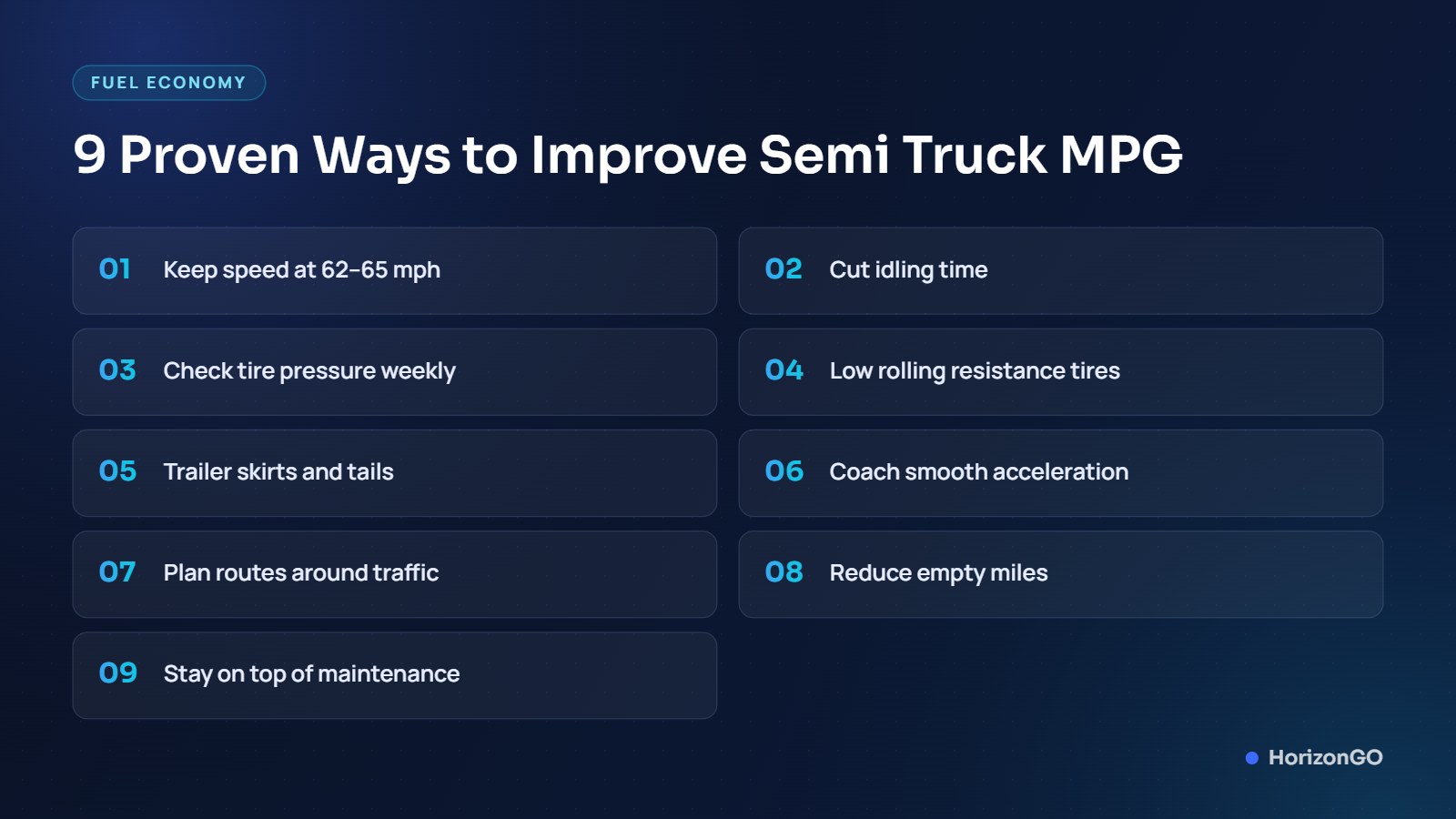
9 Proven Ways to Improve Semi Truck MPG
Fuel is usually a fleet’s biggest cost after driver pay, so every tenth of an MPG matters. On a truck running 100,000 miles a year, moving from 6.5 to 7 mpg saves roughly 1,100 gallons of diesel. These are the changes that make the biggest difference to the average MPG of a semi truck in your fleet:
1. Keep highway speed at 62 to 65 mph
Aerodynamic drag rises quickly above 60 mph. Many fleets govern trucks in the low to mid 60s because each extra mph costs fuel.
2. Cut idling time
An idling truck burns fuel and gets zero miles for it. Auxiliary power units, battery HVAC systems and clear idle policies all help.
3. Check tire pressure every week
Underinflated tires increase rolling resistance and wear. A quick weekly check, or an automatic inflation system, pays for itself.
4. Use low rolling resistance tires
SmartWay-verified tires reduce the energy needed to keep the truck moving, especially on long highway runs.
5. Add trailer skirts and tails
Side skirts, gap reducers and trailer tails cut drag. The EPA SmartWay program lists verified aerodynamic devices.
6. Coach smooth driving
Hard acceleration and braking waste fuel. Telematics scorecards make it easy to coach drivers and reward the most efficient ones.
7. Plan routes around congestion
Stop-and-go traffic kills fuel economy. Good dispatch planning avoids peak congestion where possible. See our route adjustment strategies.
8. Reduce empty miles
Miles driven without a load still burn fuel but earn nothing. Better load planning and backhauls lift your real fuel efficiency per paid mile. Our guide on how to find truck loads can help.
9. Stay on top of maintenance
Clean filters, correct alignment and healthy injectors keep engines efficient. A fleet maintenance system makes sure nothing is missed.
Track Fuel Efficiency Per Load
Knowing the average MPG of a semi truck in your fleet is only useful if you connect it to revenue. A TMS like HorizonGO ties fuel, miles and pay to every load, so you can see profit per load instead of guessing. Book a free demo to see it with your own data.
One last tip: measure MPG the same way every time. Use fuel card data and odometer or ELD miles over at least a month, per truck and per driver, rather than a single tank. That gives you a reliable baseline, shows which changes actually work, and makes it far easier to spot a truck or a route that is quietly costing you money every week.
Related Guides
- What Is The Average Fuel Mileage For Semi Trucks?
- Truck Toll Charges in USA –Best Explained 2026 Guide
Frequently Asked Question
What is the MPG for an 18-wheeler?
On average, an 18-wheeler can achieve between 5 and 9 MPG. However, newer models with advanced fuel-efficient technologies can get as much as 10 to 13 MPG.
What MPG does a mail truck get?
The fuel efficiency of mail trucks can vary depending on the model and year. On average, traditional mail trucks like the USPS Grumman LLV (Long Life Vehicle) used to get around 10-15 miles per gallon (MPG).
What is considered high mileage for an over-the-road semi-truck, and how do they go so long compared to typical passenger vehicles?
High mileage for a semi-truck is roughly 500,000 to 1 million miles. Their durability stems from robust design, meticulous maintenance, lower engine RPMs, and specialized components for heavy loads and long journeys.
Conclusion
For the average MPG of 18 wheeler semi trailer, it’s a road where the numbers can truly truck-along in several directions. From smooth aerodynamics to load management, and the changing technology, the quest for higher fuel efficiency is an ongoing journey for the trucking industry. So, let’s keep our eyes on the highway and our foot on the pedal of innovation as we move towards a more efficient and continuous future in trucking.


