

In this article, we’ll talk about what EDI is, walk through the main types of EDI one by one, and show you how each type is used in TMS (Transportation Management System) software.
What Is EDI?
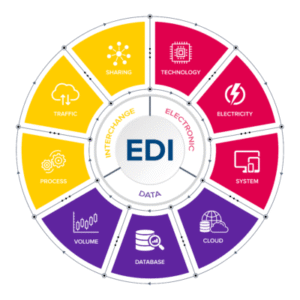
EDI stands for Electronic Data Interchange.
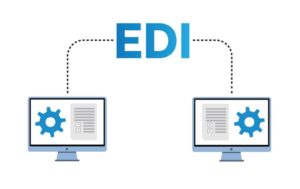
In simple words, Electronic Data Interchange is a way for two computers to swap business documents automatically — no printing, no emailing PDFs, no typing the same information twice.
Think about how companies usually share documents. Som ne creates a purchase order and emails it. Someone else opens it, reads it, and types the details into their own system. It works, but it’s slow — and it’s easy to mess up.
How Does EDI Work?
The process sounds fancy, but it boils down to three simple steps:
- Something happens in your system. For example, you create a load tender in your TMS.
- Your Electronic Data Interchange software translates it. The document is converted into a standard format, like X12 or EDIFACT.
- The message travels securely to your partner. Their system reads it automatically — and usually sends back a receipt confirming it arrived.
That’s it. No magic. Just two computers following a set of agreed rules.
Types of EDI
Now for the part you came for.
There isn’t just one kind of Electronic Data Interchange. There are several types of EDI, and they mostly differ in how the data gets from point A to point B. Here are the main ones, explained simply.
1. Direct EDI (Point-to-Point)
Direct Electronic Data Interchange is exactly what it sounds like: your system connects straight to your partner’s system. No middleman, no third party sitting in between.
Both sides agree on the format and connection method upfront. It’s fast and gives you full control — but every new partner means a new setup, so it takes effort if you have lots of them. Big retailers and manufacturers often use direct Electronic Data Interchange with their largest suppliers.
2. EDI via VAN (Value-Added Network)
A VAN is like a private post office for Electronic Data Interchange. Instead of connecting to every partner separately, you send your Electronic Data Interchange messages to the network, and it delivers them to your partner’s mailbox. They pick the messages up when they’re ready — and do the same for you.
VANs used to be the default way to do Electronic Data Interchange , and they’re still common in large supply chains. The downside? You usually pay per message, so costs can creep up as volume grows.
3. EDI via AS2
AS2 (Applicability Statement 2) is a way to send Electronic Data Interchange securely over the internet. The data is encrypted and signed — and here’s the nice part — you get a confirmation receipt when your partner receives it. It became hugely popular after Walmart made it a requirement for its suppliers.
AS2 gives you strong security without VAN fees, which is why so many companies have moved to it.
4. EDI via FTP/SFTP/VPN
This one is the old-school workhorse. Electronic Data Interchange files are exchanged over secure file transfer (FTP or SFTP), or through a private VPN tunnel between the two companies.
It’s not fancy, but it’s reliable, cheap, and great for sending large batches of documents at once.
5. Web EDI
Web EDI is Electronic Data Interchange for people who don’t have Electronic Data Interchange .
Instead of buying software, you log into a website, fill out a simple online form, and the system converts your entries into proper Electronic Data Interchange behind the scenes. Your big partners receive standard EDI messages — you just see a friendly web page.
It’s the cheapest and easiest way to get started, which makes it perfect for small businesses.
6. Mobile EDI
Mobile EDI simply means handling Electronic Data Interchange tasks from a phone or tablet instead of a desk. It grew out of web EDI — and honestly, it makes sense. Drivers and warehouse staff aren’t sitting in front of computers all day.
7. EDI Outsourcing (Managed EDI)
With outsourced or managed EDI, you hand the whole thing to a specialist provider. They handle the connections, the mapping, the testing, and the day-to-day monitoring. You just send and receive your documents.
8. API-Based (Hybrid) EDI
The newest kid on the block.
Modern systems love APIs, but many big companies still run on classic EDI. API-based EDI bridges the two worlds: an integration layer converts API calls into EDI messages (and back) in real time. You get modern speed without forcing old-school partners to change a thing.
Common EDI Standards You’ll Hear About
All of these types of EDI carry messages written in standard “languages.” You don’t need to memorize them, but it helps to recognize the names:
- ANSI X12 — the standard used across North America, including the transportation documents you’ll see in a TMS. It’s maintained by the Accredited Standards Committee X12.
- UN/EDIFACT — the international standard managed by the United Nations, common in Europe and global trade. The UNECE publishes a helpful executive guide on it, and the EDIFACT overview on Wikipedia is a good quick reference.
- GS1 EDI — retail-focused EDI standards from GS1, the organization behind the barcode.
- Industry-specific standards — like HL7 in healthcare and SWIFT in banking.
Common EDI Transactions Used in TMS Software
If you work with a TMS, these are the EDI transaction sets you’ll bump into most often. They come from the X12 transportation family:
| EDI Code | Name | What It Does |
| 204 | Motor Carrier Load Tender | Shipper offers a load to a carrier |
| 990 | Response to a Load Tender | Carrier accepts or declines the load |
| 211 | Motor Carrier Bill of Lading | Shares the bill of lading electronically |
| 214 | Transportation Shipment Status | Sends tracking updates — picked up, in transit, delivered |
| 210 | Motor Carrier Freight Invoice | Carrier bills the shipper for the load |
| 856 | Advance Ship Notice | Tells the receiver exactly what’s coming before it arrives |
| 997 | Functional Acknowledgment | The “got it, thanks” receipt for any EDI message |
Why Businesses Bother With EDI
Still wondering if it’s worth it? Here’s what companies actually get from EDI:
- Speed. Documents move in seconds, not days.
- Fewer errors. Nobody retypes anything, so typos stop costing you money.
- Lower costs. Less paper, less postage, less manual work.
- Better visibility. Status updates flow in automatically, so you always know where a shipment is.
- Happier partners. Many large retailers and manufacturers flat-out require EDI — having it keeps you eligible for their business.
So, Which Type of EDI Should You Choose?
Quick cheat sheet:
- Just starting out or running a small team? → Web EDI
- A few big trading partners? → Direct EDI or AS2
- Lots of partners and no in-house EDI team? → Managed EDI
- Modern systems talking to legacy partners? → API-based (hybrid) EDI
- Drivers and field staff sending updates? → Mobile EDI
And here’s a secret: most businesses mix two or three types. That’s completely normal.
Wrapping Up
Do a Google search on ‘EDI is Dead’, and you will find multiple documents, some over a decade old, that
forecast the imminent demise of EDI to a plethora of newer B2B communications methods. Yet here we
are in the 21st Century, and EDI is still alive and kicking.
EDI. Electronic Data Interchange. Perhaps the word “Electronic” should be substituted with “Efficient”,
or maybe with “Effective”. Or perhaps “Economic” is the best substitution since economics are the very
reason EDI is still at the forefront of electronic communications.
It is concise. Large amounts of data can be transmitted in a fairly small file. It is a standardized format.
Specific rules apply to all users of EDI documents. It is simple. An invoice number is always an invoice
number. Most importantly, however, many companies have invested in it. Since it works, they are not
inclined to spend money to completely reinvent the wheel using newer technology that may or may not
show a reasonable ROI.
Some will groan at my statement that EDI is simple. In reality, it is. The problems, long implementation
times, testing, and setup costs can, in almost every instance, be attributed to human failure to not
follow EDI’s standards. In other words, inconsistent implementation of the standard definitions. In
those cases, it is similar to trying to put together a 5000 piece puzzle with no box top picture to work
from and no idea what the completed puzzle is supposed to look like
And if your business runs on a TMS, EDI is the quiet worker keeping load tenders, status updates, and invoices moving without endless emails and phone calls. Start simple, Connect with HorizonGO, pick the type that fits your partners, and grow from there.


