

In this article, I’ll break down the 3 most practical ways cloud fleet connectivity and mobility can hand you total control of your fleet operations, anytime, anywhere. I’ve been in the fleet management industry since before most people had internet, and one thing I’ve learned is this:
“Trying to manage a fleet with yesterday’s tools is like using a map from 1999 in 2026.”
Why? Let me explain.
Why Old-School Fleet Management Is Holding You Back
When you’re running spreadsheets, taking driver calls after hours, and wondering where half your trucks are, what you don’t realize is:
- How much fuel you’re wasting on inefficient routes
- How many customers are frustrated because of late deliveries
- How much time your team spends on paperwork instead of productivity
- How vulnerable you are when something goes wrong off-hours
Most of the time, you’re reacting instead of leading. You get a call:
“Hey boss, the delivery location is closed, what do I do now?”
” That’s it “
Your day is now chaos.
Not because you’re a bad manager, but because you don’t have live visibility. You’re making decisions in the dark. This is why relying on old methods in 2026 fleet management is just exhausting and expensive.
The real question isn’t “How many fires can I put out today?”
It’s “How do I see problems before they happen and fix them from anywhere?”
And that’s exactly what the rest of this article is about.
How I Transformed My Fleet Operations (And How You Can Too)
So, you want to run a smoother, more profitable fleet, but you’re stuck putting out fires every day. I get it. I was there ten years ago. Sitting in my office with three monitors, good at logistics, but constantly stressed about what I couldn’t see. I tried what everyone did back then, more phones, more radios, more check-in calls. It was a disaster. I was always the last to know about problems. It felt helpless and got me exactly nowhere.
That’s when I started looking into cloud fleet connectivity. I talked to other fleet owners across the USA, tested software, and realized something huge:
“This isn’t even complicated.”
You know why? Because when you have live data, real-time tracking, and mobile access, everything changes. Let me show you how.
First, Let’s Get Your Mindset Right (This Part is Simple)
1. You’re Not Just Tracking Trucks, You’re Running a Mobile Business.
I made a mistake early on. I thought cloud fleet connectivity was just a fancy GPS. Then I saw carriers in Texas and California using it to cut fuel costs by 18% and boost on-time deliveries by 23%. Suddenly, it wasn’t about “tracking”, it was about total business control.
You do this: Ask yourself one question:
“What’s the #1 thing that keeps me up at night?”
- Late deliveries?
- Driver safety?
- Rising fuel costs?
- ELD compliance headaches?
2. Your “Command Center” Fits in Your Pocket.
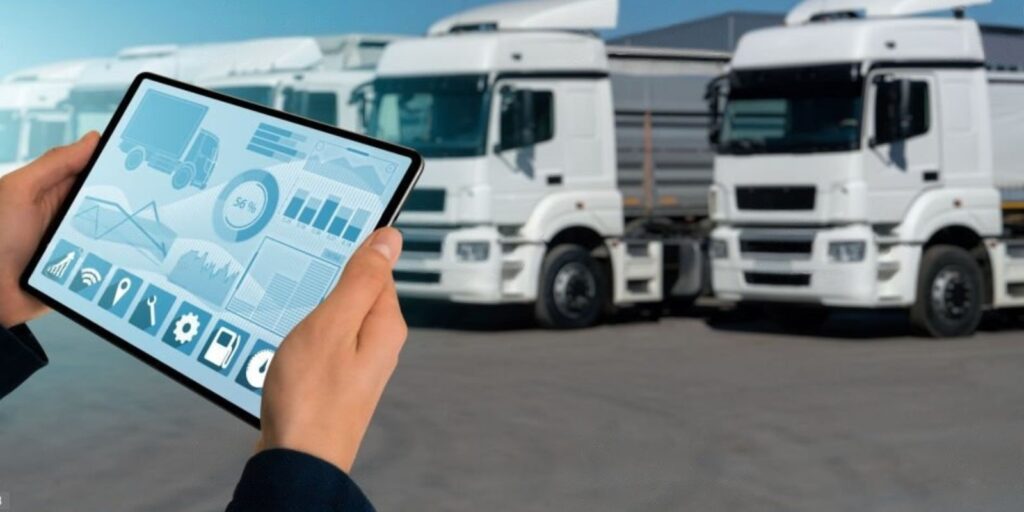
I set up my phone with our cloud fleet dashboard. That’s it. Just one app. Here’s what I see in 10 seconds:
- Live map of all trucks
- Today’s exceptions (delays, detours)
- Fuel burn rate
- Driver HOS status
3. Remember Their 3 Big Problems.
Every fleet manager I talk to has the same three headaches:
- “I never know where my trucks are when I need to.”
- “Fuel costs are eating my profit.”
- “My drivers and dispatchers aren’t connected.”
When you start using cloud fleet connectivity, you solve these first. Say, “I know how frustrating it is when you get a customer call and have no clue about their shipment.” They’ll immediately think, “Yes! You get it!”
Now, Let’s Talk About the 3 Game-Changing Ways Cloud Fleet Connectivity Works
1. Run Your Fleet From Anywhere, Literally.
I was at my daughter’s soccer game in Ohio when I got an alert: a truck in Tennessee had a mechanical issue. Old me would’ve panicked. With cloud fleet mobility, I tapped my phone, reassigned the load to another nearby truck in two minutes, and the customer never knew there was an issue.
Why it works:
- Your phone becomes your office.
- Dispatchers can work from home (a huge win in today’s job market).
- After-hours emergencies get handled without you driving back to headquarters.
Real example: A carrier in Florida told me they saved a $20,000 account because the manager rerouted a truck during a storm, from his living room.
2. Real-Time Data Stops Problems Before They Cost You Money.
Think about Amazon’s same-day delivery expectations. Now think about your customers. They want to know exactly where their shipment is. Cloud fleet tracking gives you that power.
Here’s what live data lets you do:
- See a delay at 10 AM, not 5 PM.
- Reroute around traffic or closed locations instantly.
- Send automated updates to customers (“Your delivery is 30 minutes away!”).
- Spot fuel-wasting routes and driver habits hurting your bottom line.
The proof:
I want to show you exactly what changes when you switch. Look at this comparison—it’s what my team saw in just 90 days:
| What You Deal With Now | With Cloud Fleet Connectivity |
|---|---|
| Guessing ETAs, missing deliveries | Live GPS ETAs, 95% on-time rate |
| Monthly fuel reports, still wasting | Real-time mpg tracking, save 15-20% on fuel |
| Paper logs, DOT anxiety | Automated ELD/HOS, always audit-ready |
| “Where’s my truck?” calls | Always-visible map, no more panic calls |
| Billing delays, lost PODs | Digital proof of delivery, invoice same-day |
3. Keep Drivers Happy and Connected.
Let’s be real, driver turnover hurts. One thing drivers hate? Clunky, outdated tech. Cloud fleet solutions give them a simple, clean app on their phone or tablet.
What drivers love:
- Easy turn-by-turn navigation
- Simple messaging with dispatch
- Digital paperwork (no more clipboards)
- Automatic ELD logs—no manual entry
What you’ll love:
- Less driver frustration
- Faster onboarding for new hires
- Fewer compliance issues
- Happier, more productive teams
Your Simple “First Week” Cloud Fleet Plan
Don’t overcomplicate this. Just do these four things, in order:
- Pick one pain point to solve first (fuel, delays, visibility).
- Test one cloud fleet platform (ask for a demo of Samsara, Motive, or similar).
- Equip just 2-3 trucks with the technology as a pilot.
- Track the results for 30 days, focus on fuel savings or on-time % improvements.
That’s it. That’s the whole start. The secret isn’t in buying the fanciest software—it’s in using cloud fleet connectivity to make better decisions, faster, from anywhere.
You already know how to manage a fleet. Now you just need the real-time visibility to do it brilliantly. Follow these steps, be patient, and stay focused on the data.
You’ve got this. And if you need a sounding board, I’m here. Reach out anytime.
Quick FAQs: Cloud Fleet Connectivity Answered
What is cloud fleet connectivity?
Live data access from trucks to cloud—GPS, docs, dispatch on any device.
Best cloud fleet management software?
Samsara, Motive, KeepTruckin for fleet tracking + ELD.
Cloud fleet cost vs benefit?
$25/truck/month → $2K fuel savings/month.
Is cloud fleet secure?
Enterprise-grade encryption, SOC2 compliant.
Fleet connectivity ROI timeline?
3 months average, faster POD alone pays for it.


